Closed world
Define the resources, relationships, and conditions that are already part of the problem.

GX LIVE MARKETING · LOCAL PREVIEW
A GX guide to use constraints, existing resources, and patterns of change as starting points for a new idea.
SOLUTION ARCHITECTURE · METHOD
A way to explore possibilities within the real limits of a problem, rather than treating constraints as a barrier.
The recovered source presents SIT as a discipline for observing the elements of a challenge, defining its world, and reorganizing what is already available. The method helps make a possibility visible that habit can obscure.
This guide presents a framework for an initial conversation; each application requires its own context, scope, and validation.
READING PRINCIPLES
The principles are presented as a framework for design and review. They do not replace a specific recommendation, diagnosis, or implementation.
Define the resources, relationships, and conditions that are already part of the problem.
Use the constraint as a prompt to imagine a concrete alternative.
Ask which element sustains the friction and how it could be transformed.
Explore new uses based on the actual properties of a component.
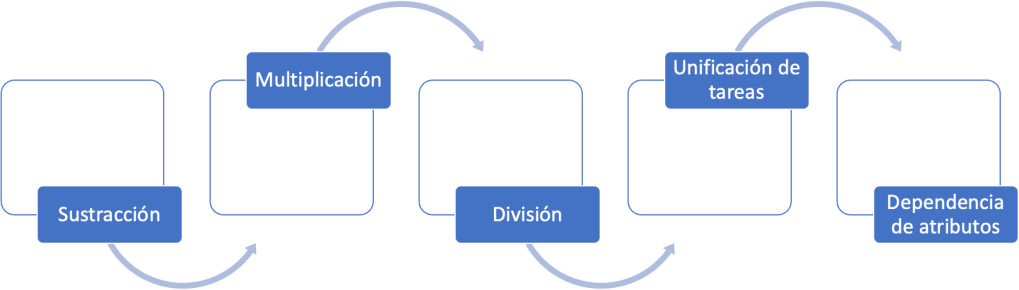
SIT starts with the closed world: before looking for something new, identify the components, people, messages, spaces, and relationships already involved in the challenge. The recovered original describes five templates for changing that configuration. They are not five mandatory stages or a promise of more ideas per minute. They are different lenses for exploring alternatives, finding a useful function, and comparing it with the project's actual conditions.
01
Temporarily remove a component that seems essential and examine the remaining configuration. This can expose a new function or friction that depended on that element. Then consider whether another closed-world resource can take on its role. This does not mean removing safety, accessibility, consent, or necessary information: those requirements remain outside the experiment.
02
Make a copy of an existing component, but change one of its properties. The difference matters: repeating the same thing without a variation does not explore a new possibility. Compare two messages, two interaction points, or two uses of a display. Define what changes and what remains constant so the alternatives can be understood.
03
Separate a product, service, or journey into parts and reorganize them in space, time, or by function. An explanation previously delivered at the end might help at the beginning; a long activity could become several clearer moments. Ask not only how to divide, but which relationship changes and whether people still understand the whole.
04
Give an additional function to a resource already within the problem's world. A display can orient someone and support a choice; a surface can present information and support a conversation. The second task must work alongside the first. Review clarity, workload, and use conditions before assuming that combining functions improves an experience.
05
Identify characteristics that can vary and explore a relationship between them. Create, change, or remove a dependency. For example, guidance could change with the moment of a journey instead of being identical in every situation. Describe the rule and exceptions; do not turn it into automated personalization or data processing without an agreed scope.
Imagine a brand experience with an existing interaction point, screen, message, and facilitator. This is an illustrative example, not an executed case. The graphic keeps that inventory and explores five different arrangements. It does not require using all five: each alternative needs a review of understanding, feasibility, and participation conditions before selection.

A template does not choose the final format. It helps define a concrete alternative that can then be connected to the project's context, resources, and people.
Explore signals, participation, and contact points without assuming more production is the answer. Try one variation and observe what the person understands.
Explore brand experiencesReorganize a task or combine functions in an existing interface. Compare prototypes before requesting a new feature; accessibility and consent remain essential.
Explore digital solutionsBring the inventory, alternative, and constraints into the project definition. Separate imagination from evidence; no template activates a system or integration.
Return to Solution ArchitectureDescribe the transformation first; then ask what use it might have. A possibility needs a review of understanding, feasibility, and limits. If it does not pass, discard it or revisit the inventory. An ideation session is not implementation or a proven innovation outcome.
No. Several can be compared, but selection requires understanding the challenge. The number of ideas is not a substitute for relevance or testing.
It bounds this exploration to the problem's resources. If a later solution needs something external, review it as a separate scope decision rather than a resource already available.
SIT explores transformations through patterns. Design Thinking helps understand people and test a hypothesis. They can inform one another, but an SIT exploration does not replace that understanding.
WITHIN THE SAME SYSTEM